
15 Authentic Italian Dishes All Tourists Must Try
If you’re heading to Italy, the food alone is worth the trip. Every region has its own culinary identity, and you’ll notice immediately that what you’ve been calling “Italian food” back home is only a fraction of what’s out there. Here’s a breakdown of the authentic Italian dishes all tourists must try, organized by region so you can eat your way across the whole country.
Supplì (Rome, Lazio)
Before you get to the pasta, start with supplì. These are deep-fried rice croquettes filled with tomato-braised rice and a chunk of mozzarella in the center. When you pull one apart, the cheese stretches, which is how you know they’re done right. You’ll find supplì at street food stands and local pizzerias all over the city.
Cacio e Pepe (Rome, Lazio)
Rome’s most iconic pasta dish uses just three ingredients: pasta, Pecorino Romano, and black pepper. The technique is what makes it special, which is using starchy pasta water to emulsify the cheese into a creamy sauce without any cream involved. It’s sharp, peppery, and intensely savory.
Ribollita (Florence, Tuscany)
Ribollita is a thick Tuscan bread soup built on cannellini beans, lacinato kale, and day-old bread. The name means “reboiled,” because the dish is traditionally made in large batches and reheated over multiple days, which thickens it and deepens the flavor. It’s one of the most filling things you’ll eat.
Bistecca alla Fiorentina (Florence, Tuscany)
This is a T-bone steak from Chianina cattle, grilled over high heat and served rare. It’s seasoned with olive oil, salt, and black pepper—nothing more. You order it by weight, typically a minimum of one kilogram, and it comes to the table whole for the group to share.
Risotto alla Milanese (Milan, Lombardy)
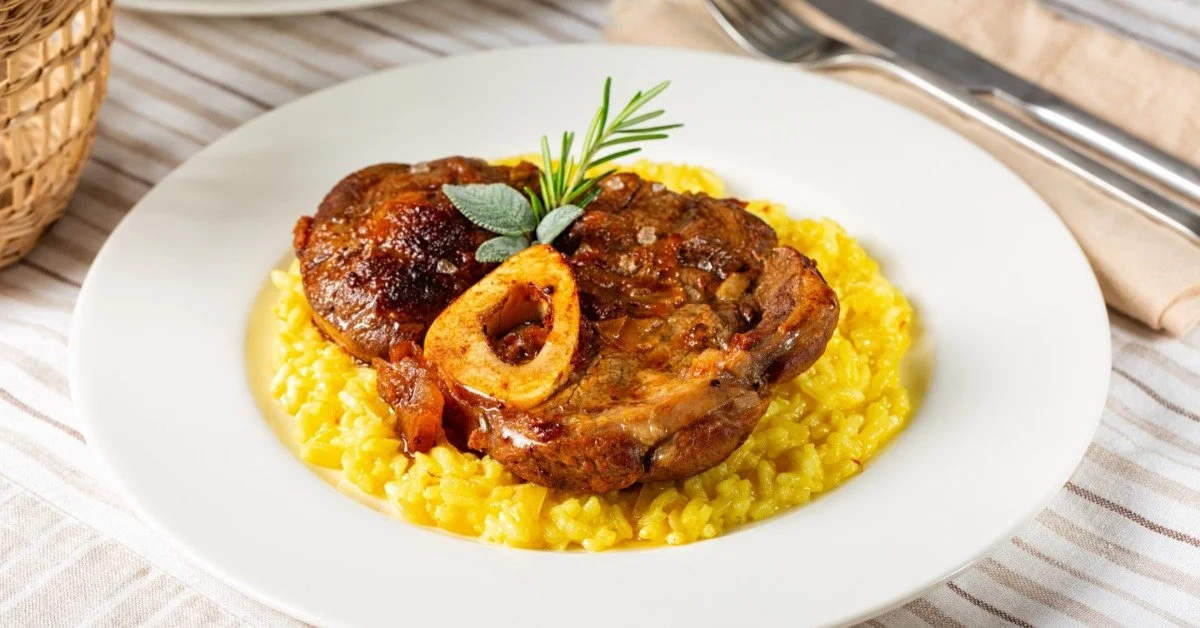
This saffron-infused risotto is the signature dish of Milan. The saffron gives it a deep gold color and a slightly floral, earthy flavor that pairs with the richness of Parmigiano-Reggiano and butter. Milanese risotto is traditionally served as a side to braised veal shank (ossobuco), but you’ll also find it served solo as a first course.
Cotoletta alla Milanese (Milan, Lombardy)
This is a bone-in veal chop that’s pounded thin, breaded, and pan-fried in clarified butter until golden. It’s crispy on the outside, tender inside, and eaten with a squeeze of lemon. It predates the Wiener Schnitzel debate by centuries, and Milanese chefs are very clear about that.
Pesto alla Genovese (Genoa, Liguria)
Authentic pesto comes from Genoa, and it’s made by hand in a marble mortar with Genoese basil (smaller leaves, sweeter flavor), Ligurian extra virgin olive oil, pine nuts, Parmigiano-Reggiano, Pecorino Sardo, garlic, and coarse salt. The texture is looser and fresher than anything you’ll find in a jar. It’s served with trofie or trenette pasta, never penne.
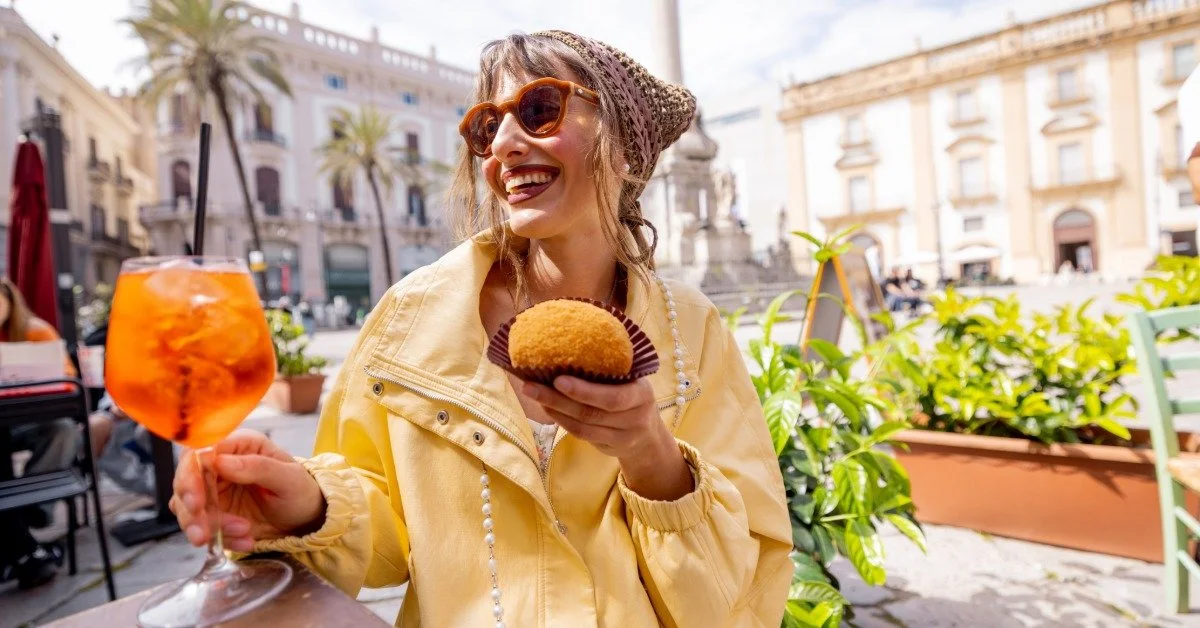
Arancini (Sicily)
Sicily’s arancini are deep-fried rice balls filled with ragù, peas, and mozzarella. The rice is seasoned with saffron, rolled into a cone or sphere shape depending on the city, breaded, and fried until crispy. You’ll find arancini everywhere, from bakeries to street carts.
Pasta alla Norma (Catania, Sicily)
Named after the opera Norma by Catanian composer Vincenzo Bellini, pasta alla Norma combines rigatoni or spaghetti with a rich tomato sauce, fried eggplant, salted ricotta, and basil. The salted ricotta (ricotta salata) is essential. It has a sharp, slightly tangy flavor that cuts through the sweetness of the tomatoes. It’s a Sicilian classic you’ll find on every menu across the island.
Orecchiette con le Cime di Rapa (Bari, Puglia)
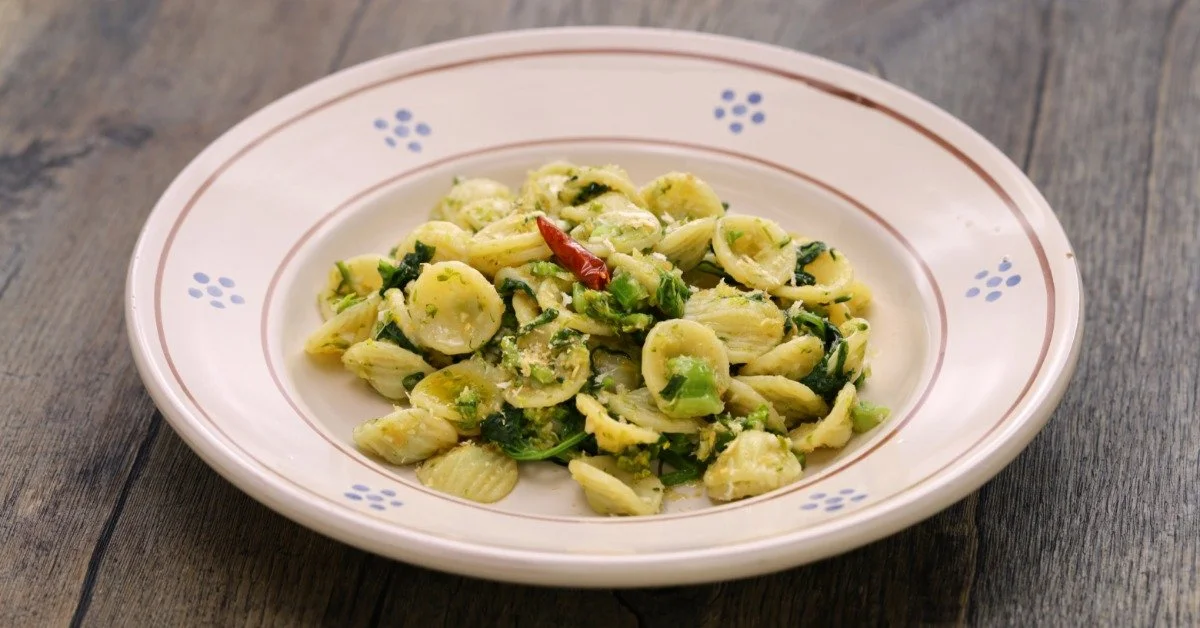
Puglia’s most distinctive pasta shape looks like small ears (orecchiette means exactly that), and it’s traditionally served with sautéed broccoli rabe (cime di rapa), anchovies, garlic, and chili. The bitterness of the greens, the saltiness of the anchovies, and the heat of the chili create a combination that’s bold and simple at the same time.
Ragù alla Bolognese (Bologna, Emilia-Romagna)
Bologna is the birthplace of ragù, and the real version bears no resemblance to the thick, tomato-heavy meat sauce most people know. Authentic Bolognese uses beef, pancetta, a small amount of tomato paste (not canned tomatoes), milk or cream, white wine, and a long, slow simmer of several hours. It’s served with fresh tagliatelle, never spaghetti.
Tortellini in Brodo (Bologna, Emilia-Romagna)
While you’re in Bologna, you need to try tortellini served in capon broth. These tiny stuffed pasta rings are filled with a mixture of pork loin, prosciutto, mortadella, Parmigiano-Reggiano, and nutmeg. The broth has to be rich and clear. A well-made version of this soup is one of the most comforting things you can eat in all of Italy.
Pizza Napoletana (Naples, Campania)
Neapolitan pizza is a protected food product under European law. To earn the name, the pizza must undergo a specific preparation method. The dough is made with specific flour and fermented for a minimum of eight hours. It’s stretched by hand, topped with San Marzano tomatoes and fresh fior di latte mozzarella, and baked in a wood-fired oven at 900°F for 60 to 90 seconds. The result is a soft, chewy crust with a charred edge (called a cornicione) and a moist, slightly soupy center. Eating it with a fork is completely acceptable.
Porchetta (Central Italy: Lazio, Umbria, Marche)
Porchetta is a whole boneless pig, heavily seasoned with garlic, rosemary, fennel, and black pepper, then rolled and slow-roasted until the skin turns crispy and the interior stays moist and fragrant with herbs. It’s sold from roadside trucks, market stalls, and festivals across central Italy. Typically, you eat it sliced and layered into a crusty roll.
Cantucci con Vin Santo (Tuscany)
Cantucci are twice-baked almond cookies with a hard, dry texture designed specifically for dunking. Vin Santo is a sweet dessert wine made from partially dried grapes. You dip the cantucci into the wine, let them soften slightly, and eat them together. This combination is how Tuscans traditionally close a meal, and you’re sure to love it too.
Eat Your Way Through Italy
All tourists must try to enjoy these authentic Italian dishes because they represent the country’s deepest culinary traditions, from the simplest street food to the most celebrated regional recipes. If you want to build an itinerary around the best cuisine Italy has to offer, contact Italy Luxury Tours. From our classic Italy tours to our fully custom-designed private vacations, we ensure you get to experience the best of the Bel Paese, especially when it comes to food.
