
Aosta Valley Travel Guide: Castles, Roman Ruins and Alpine Villages
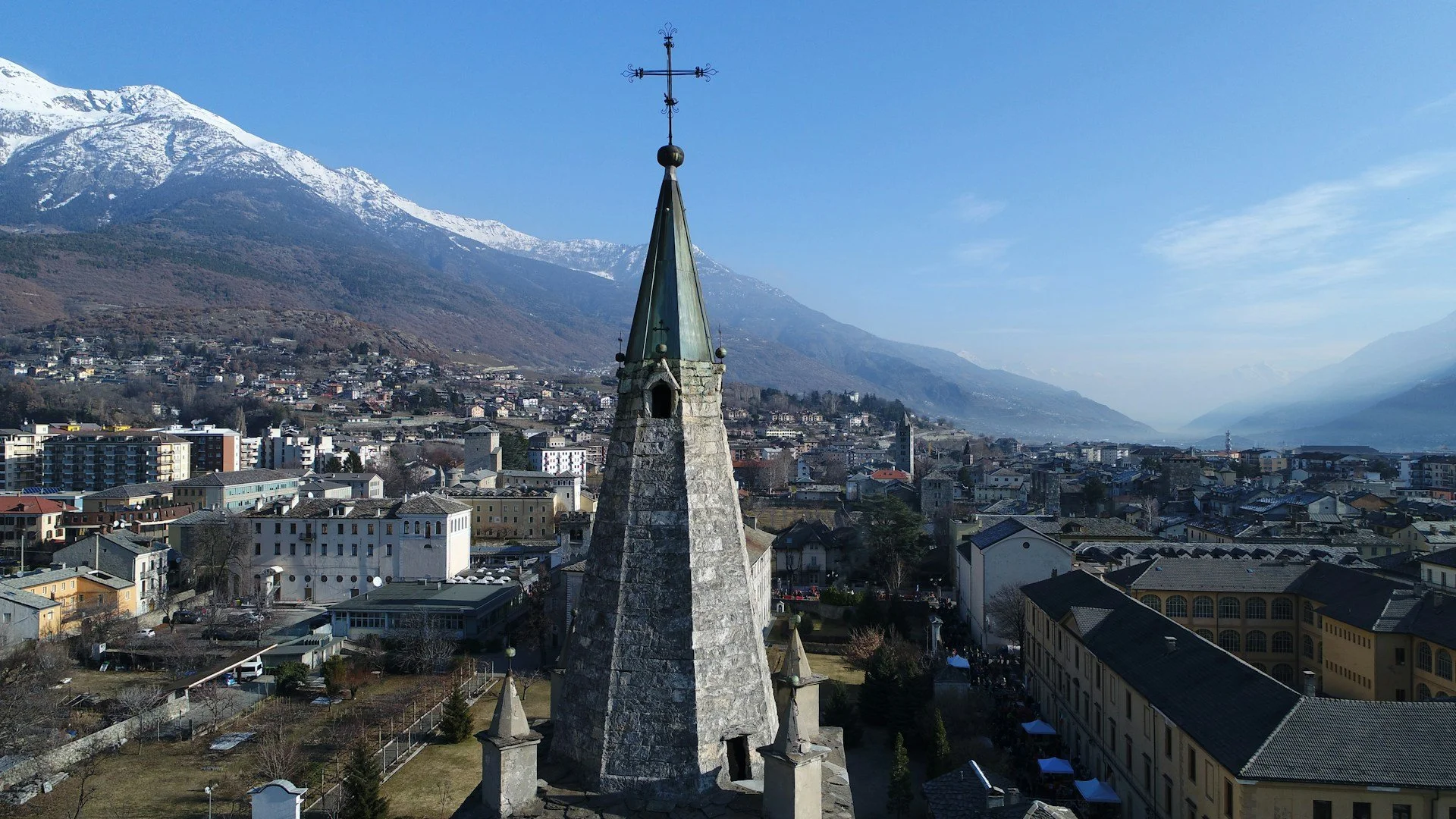
Tucked into the far northwestern corner of Italy, beneath some of the highest peaks in the Alps, the Aosta Valley feels distinctly different from the Italy many first-time visitors imagine. Instead of Renaissance cities and rolling Tuscan hills, the landscape is defined by snowcapped mountains, stone villages, vineyards clinging to steep slopes and castles commanding the valley from rocky outcrops.
Yet the region offers much more than spectacular scenery. Aosta itself contains some of the most impressive Roman remains in northern Italy, while medieval and Renaissance castles appear throughout the surrounding countryside. Venture farther into the mountains and you reach villages such as Cogne and Courmayeur, where Alpine traditions remain an important part of everyday life.
For travelers looking beyond Italy's best-known destinations, the Aosta Valley combines history, mountain scenery, regional cuisine and uncrowded cultural experiences within a surprisingly compact area.
Why Visit the Aosta Valley?
The Aosta Valley, or Valle d’Aosta, is Italy’s smallest region, occupying a strategic Alpine corridor that has connected Italy with the rest of Europe for thousands of years. That geography explains much of what visitors see today. Roman roads once crossed the mountains here, noble families later fortified the valley with castles and towers, and historic settlements developed along important routes through the Alps.
The Aosta Valley is particularly rewarding for travelers who want to experience several sides of Italy without constantly changing hotels or spending entire days in transit. Within one region, you can spend the morning walking through Roman ruins, have lunch while overlooking vineyards, tour a medieval castle in the afternoon, and finish the day in an Alpine village surrounded by towering peaks.
Its location also makes Aosta a natural addition to a Piedmont and northern Italy itinerary. Italy Luxury Tours already incorporates the region into its Piedmont and Aosta Valley journeys, making it possible to combine the wines and cuisine of Piedmont with a very different Alpine landscape.
Explore Aosta: The “Rome of the Alps”
The best place to begin is the regional capital of Aosta, one of northern Italy’s most fascinating small cities.
The Romans founded Augusta Praetoria in 25 BC, and the importance of the settlement is still remarkably visible today. Aosta retains Roman gates, sections of its defensive walls, a triumphal arch, archaeological remains, and the monumental ruins of its ancient theater — earning it the nickname the “Rome of the Alps.”
Walk Through the Porta Praetoria and Arch of Augustus
The Arch of Augustus, constructed at the time of the city's foundation, still marks the eastern approach to the old city. Nearby, the remarkably preserved Porta Praetoria once served as the monumental eastern entrance to Augusta Praetoria.
Rather than feeling like an isolated archaeological park, Aosta allows you to encounter antiquity as you walk between cafés, shops, churches, and attractive pedestrian streets.
See the Roman Theatre
A short distance from the Porta Praetoria stands one of Aosta's most dramatic ancient monuments: the Roman Theatre.
Its surviving façade rises approximately 22 meters, while the original theatre is believed to have accommodated more than 3,000 spectators. Surrounded by Alpine peaks, the ancient stone structure creates one of the region's most memorable juxtapositions of Roman history and mountain scenery.
Go Beneath the City at the Cryptoporticus
Another essential stop is the Forensic Cryptoporticus, an underground system of vaulted Roman corridors associated with Aosta's ancient forum and sacred precinct.
It is much less visually obvious than the theatre or city gates, but that is part of its appeal. Descending beneath present-day Aosta gives visitors a tangible sense of the layers of civilization beneath the modern city.
The Castles of the Aosta Valley
One of the most striking things about traveling through the Aosta Valley is the sheer number of castles, fortified residences, and towers visible from the road.
Many of the region’s earliest medieval fortifications appeared between the 11th and 12th centuries. Over time, some defensive strongholds evolved into sophisticated aristocratic residences, reflecting the power and tastes of noble families such as the Challants.
You could build an entire trip around the castles of the Aosta Valley alone, but a few make particularly rewarding stops.
Fénis Castle: The Classic Medieval Fortress
For many travelers, Fénis Castle is the quintessential Aosta Valley castle.
Unlike fortresses positioned high above the valley for military advantage, Fénis sits on a relatively low rise. Its purpose was as much residential and administrative as defensive: it became an important seat of the powerful Challant family.
Its towers, double curtain walls and crenellations create the storybook exterior, but the interior courtyard is equally memorable, with wooden galleries and medieval frescoes. Much of the castle's recognizable form was developed under Aimone of Challant during the 14th century.
Fénis is only about 16 kilometers from Aosta, making it an easy addition to a privately guided day in the central valley.
Issogne Castle: A More Refined Side of Noble Life
Where Fénis evokes medieval fortification, Issogne Castle provides a glimpse into a more elegant aristocratic world.
Rather than emphasizing military strength, the residence is known for its art and decoration. Transformed around the turn of the 16th century into an elegant residence, it preserves Gothic-Renaissance elements, frescoes, and its famous pomegranate fountain.
Visiting Fénis and Issogne during the same journey offers an especially interesting comparison between the defensive imagery of the Middle Ages and the increasingly comfortable lifestyles of Renaissance nobility.
Fort of Bard: History in a Spectacular Setting
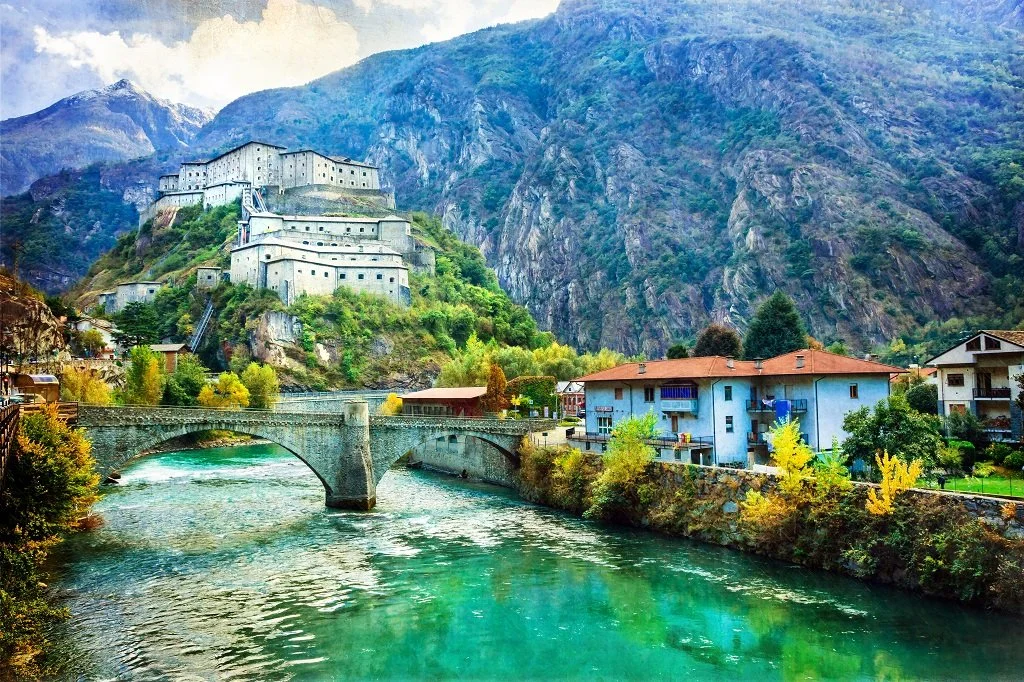
Near the southeastern entrance to the valley, the tiny village of Bard sits beneath the massive Fortress of Bard.
The present fort is largely an early-19th-century barrier fortress, restored today as a cultural complex containing museums and temporary exhibitions. Panoramic lifts make the upper sections more accessible while providing broad views over the village and surrounding valley.
The village itself deserves time as well. Historic houses line its narrow streets, and traces of the old Roman consular road survive nearby.
Sarre Royal Castle
Close to Aosta, Sarre Castle introduces another chapter in the valley's history.
The property was purchased by King Victor Emmanuel II in 1869 and became associated with royal hunting expeditions in the surrounding mountains. Today it offers insight into the presence of the House of Savoy in the region.
Rather than attempting to see every castle, choose two or three that tell contrasting stories. With a private guide and driver, the journey between them becomes part of the experience rather than simply transportation.
Alpine Villages Worth Adding to Your Aosta Valley Itinerary
History may provide the framework for a trip through the region, but the villages give the Aosta Valley much of its character.
Cogne: Mountain Traditions and Gran Paradiso
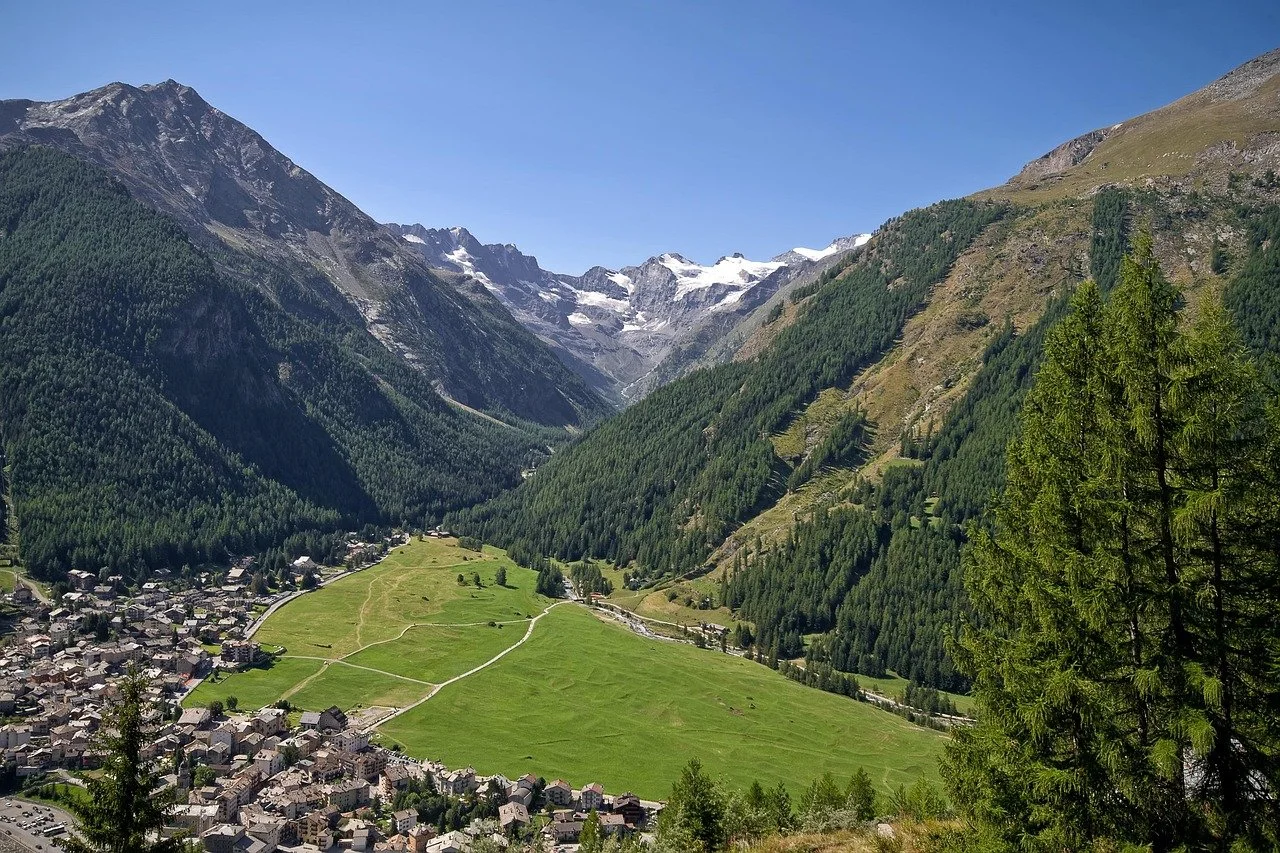
Set at more than 1,500 meters beneath the peaks of Gran Paradiso National Park, Cogne is one of the most appealing bases for travelers who want a quieter Alpine experience.
The village sits beside the broad Sant’Orso meadows, with smaller hamlets including Valnontey, Lillaz, and Gimillan scattered throughout the surrounding valley. Traditional stone-and-wood architecture, local craftsmanship, walking trails, and the enormous mountain landscape give the area an atmosphere that feels distinctly removed from Italy’s busy cities.
Cogne is particularly rewarding for travelers who want to combine cultural sightseeing with gentle outdoor exploration rather than strenuous adventure.
Courmayeur Beneath Mont Blanc
At the opposite end of the valley, Courmayeur offers a more polished Alpine experience at the foot of the Mont Blanc massif.
Although internationally known as a mountain destination, the historic center and surrounding hamlets retain a strong Alpine identity. From nearby Entrèves, the Skyway Monte Bianco climbs to Punta Helbronner at 3,466 meters, providing high-altitude views without the demands of mountaineering.
Courmayeur is particularly appealing for travelers who enjoy combining dramatic landscapes with excellent hotels, refined dining and an attractive town center.
Make Time for Aosta Valley Food and Wine
The region's cuisine reflects its mountain environment. This is hearty Alpine cooking rather than the tomato- and olive-oil-driven cuisine travelers may associate with southern Italy.
Local menus often feature Fontina cheese, polenta, cured meats and rich dishes designed for colder mountain weather. Small vineyards also occupy sunny terraces along the valley, making wine a worthwhile addition to a privately arranged food-focused itinerary.
Rather than treating lunch as something squeezed between monuments, allow it to become part of the day's exploration. A castle visit followed by a relaxed regional meal or a winery tasting can create a far more memorable rhythm than rushing through several attractions.
When Is the Best Time to Visit the Aosta Valley?
For travelers primarily interested in castles, Roman ruins and Alpine villages, late spring through early autumn offers the greatest flexibility.
June and September are particularly appealing for combining sightseeing with comfortable outdoor exploration. July and August offer easy access to high mountain areas and seasonal lifts, although popular Alpine resorts are busier.
Autumn brings cooler weather and beautiful color to vineyards and forests, while winter completely changes the character of the region and makes destinations such as Courmayeur especially attractive to travelers interested in snow and Alpine atmosphere.
Opening days for castles, museums and mountain lifts can vary seasonally, so schedules should be confirmed when building the itinerary. Even major sites such as Fénis Castle and the Fortress of Bard operate different timetables at different times of year.
How Many Days Do You Need in the Aosta Valley?
Three to four days is an excellent introduction to the Aosta Valley, particularly when traveling privately.
One day can focus on Roman Aosta and its historic center. Another might combine Fénis with additional castles or local food and wine experiences. A third day can venture deeper into the mountains toward Cogne or Courmayeur.
Travelers with more time can stay longer and explore smaller villages, additional castles, vineyards and scenic valleys without repeating the same style of experience.
A private vehicle is particularly useful here. Although many towns are connected by public transportation, customized transportation allows you to link archaeological sites, rural castles, wineries and mountain communities efficiently — while stopping when a viewpoint, village or local restaurant catches your interest.
Frequently Asked Questions About Visiting the Aosta Valley
Is the Aosta Valley worth visiting if I am not a skier?
Absolutely. Skiing is only one part of the region's appeal. Roman archaeology, medieval castles, mountain scenery, food, wine, historic villages and gentle nature experiences make the Aosta Valley rewarding well beyond the winter season.
What is Aosta Valley best known for?
The region is especially known for its Alpine scenery, castles, Roman heritage and mountain communities. Aosta's exceptionally well-preserved Roman monuments distinguish it from many other Alpine destinations, while castles such as Fénis and Issogne add centuries of medieval and Renaissance history.
Can you combine Piedmont and the Aosta Valley in one trip?
Yes. In fact, the two regions complement each other exceptionally well. Piedmont offers Turin, the Langhe hills, Barolo and celebrated food-and-wine experiences, while the Aosta Valley introduces Roman history, castles and dramatic Alpine scenery.
Discover a Different Side of Northern Italy
The Aosta Valley may occupy only a small corner of the Italian Alps, but it brings together an extraordinary amount of history and landscape.
You can begin the morning beneath Roman arches in Aosta, walk through the frescoed courtyard of a medieval castle in the afternoon and end the day looking toward some of Europe's highest mountains. More importantly, it is a region that still rewards travelers who have time to look beyond the obvious.
At Italy Luxury Tours, we specialize in custom private journeys designed around each traveler’s interests, comfort, and preferred pace. Whether you would like to pair the Aosta Valley with Piedmont, explore its Roman heritage with a private guide, or combine historic castles with an elegant stay beneath the Alps, a bespoke itinerary allows you to experience this remarkable corner of Italy in a way that feels entirely your own.