
Beyond Tuscany: Why Piedmont Belongs on a Food and Wine Lover’s Italy Itinerary
For travelers dreaming of an Italian food and wine vacation, Tuscany often comes to mind first. Its vineyard-covered hills, Renaissance towns, and centuries-old culinary traditions have made it one of the most recognizable destinations in Italy.
But look northwest, toward the foothills of the Alps, and another remarkable food region awaits.
Piedmont is one of Italy’s most rewarding destinations for travelers who plan their journeys around food, wine, and local culture. Home to the vineyard landscapes of the Langhe, renowned wines such as Barolo and Barbaresco, the celebrated white truffles of Alba, artisan cheeses, hazelnuts, handmade pasta, and a deeply rooted culinary philosophy, Piedmont offers an experience that feels both sophisticated and remarkably connected to the land.
It differs from Tuscany in many ways — the atmosphere is quieter, the landscape more dramatic, and many of its greatest pleasures are found not in famous monuments but behind cellar doors, in family kitchens, at village markets, and along winding roads between vineyard-covered hills.
For travelers who have already experienced Tuscany — or simply want to discover a less familiar side of Italy — Piedmont belongs near the top of any food and wine lover’s Italy itinerary.
Why Is Piedmont So Special for Food and Wine?
Piedmont is one of Italy’s most important gastronomic regions, particularly for travelers interested in regional cuisine and the traditions surrounding wine production.
The region is home to the vineyard landscapes of Langhe, Roero, and Monferrato, portions of which are recognized by UNESCO for their centuries-old relationship between grape growing, winemaking, rural communities, and the landscape.
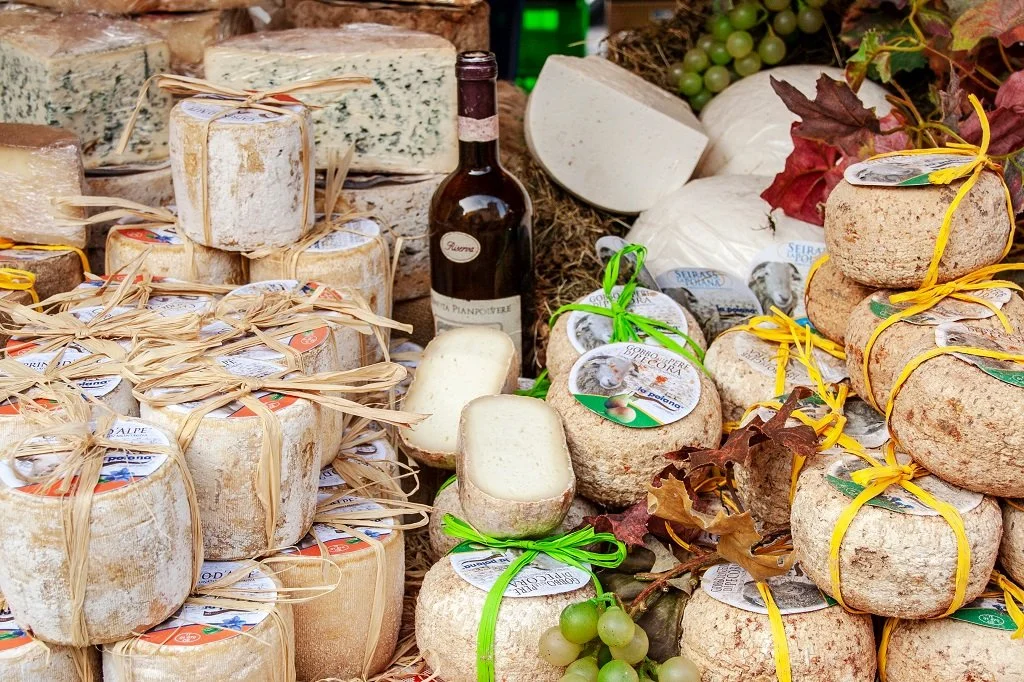
Food is equally important here. Piedmont is associated with specialties including the prized Alba white truffle, handmade tajarin pasta, agnolotti del plin, Piedmont hazelnuts, artisan cheeses, chocolate, and dishes shaped by both farming traditions and the sophisticated cuisine once served at the House of Savoy.
Perhaps most importantly, gastronomy in Piedmont rarely feels separated from place.
You can look across the vineyards surrounding a hill town in the morning, meet artisans preserving generations of local knowledge in the afternoon, and sit down that evening to a meal made from ingredients that originated only a short distance away.
The Langhe: Piedmont’s Essential Wine Country
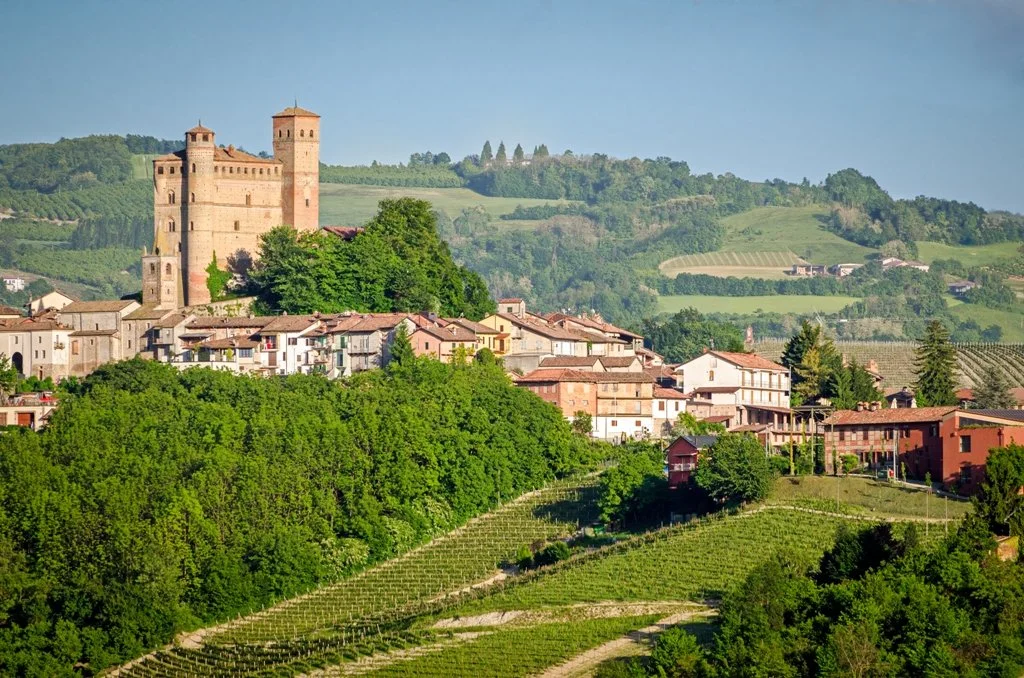
For many visitors, the heart of a Piedmont food and wine journey is the Langhe, a landscape of rolling vineyards and hilltop communities south of Turin.
The countryside is remarkably compact. Names familiar from restaurant menus around the world suddenly become real places: Barolo, Barbaresco, La Morra, Alba, Neive, and surrounding villages.
UNESCO's Vineyard Landscape of Piedmont recognizes areas within Langhe-Roero and Monferrato for their long history of winegrowing and for the relationship between native grape varieties, individual soils, villages, castles, farms, and cellars.
Barolo Beyond the Label
Barolo may have an international reputation, but the village itself is quite small.
That contrast is part of its charm.
Rather than arriving in a sprawling commercial wine destination, travelers find a historic settlement surrounded by steep vineyard-covered hills. Nearby La Morra provides some of the area's most impressive panoramic views, while country roads lead between small communities, farms, and generations-old estates.
The pleasure of visiting this landscape is understanding how closely agriculture, geography, family history, and village life remain intertwined.
For adult travelers interested in Piedmont's wine heritage, a privately arranged visit can add valuable context by explaining the area's traditions and landscapes without reducing the experience to a checklist of labels.
Barbaresco and the Eastern Langhe
Barbaresco provides another perspective on the Langhe.
The village and its surrounding hills are included within the UNESCO-recognized vineyard landscape, and nearby towns such as Neive add medieval streets and panoramic countryside to the journey.
Distances on a map may look short, but Piedmont rewards unhurried travel. Instead of attempting to cover every famous village in one day, consider allowing time for a leisurely lunch, a scenic drive, and an afternoon exploring one or two communities properly.
Alba: The Culinary Heart of the Langhe
If the vineyards form the landscape of the Langhe, Alba provides much of its culinary energy.
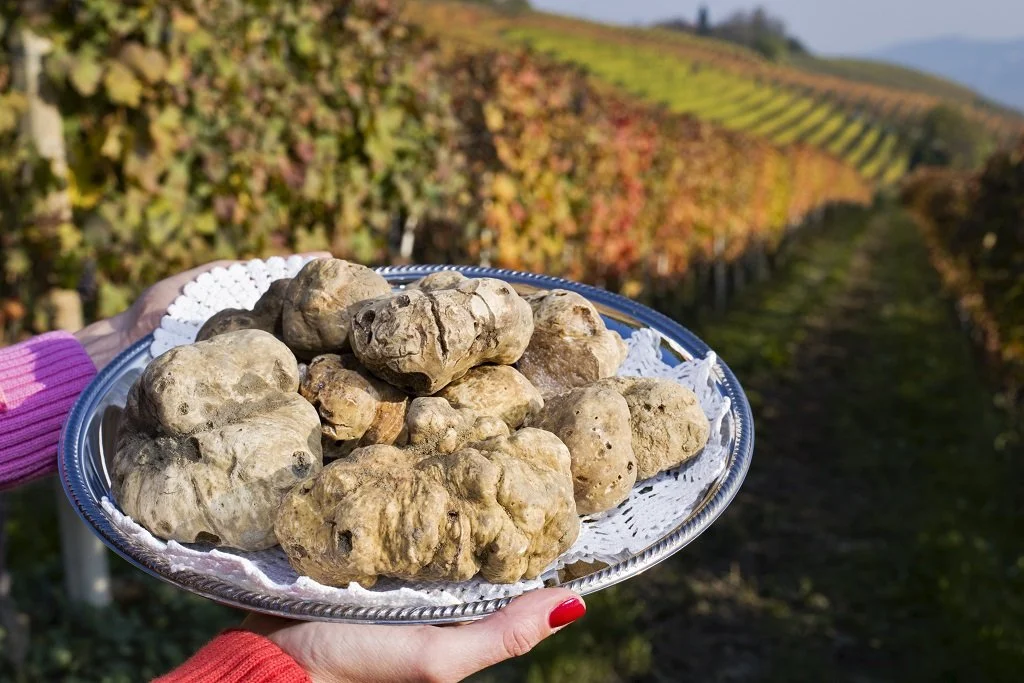
The town is internationally associated with the Alba white truffle, one of Piedmont's most celebrated seasonal ingredients. The regional tourism authority describes Alba as the capital of the white truffle, and Piedmont's official tourism information notes that the prized ingredient is especially associated with Langhe, Roero, and Monferrato.
For food lovers, however, Alba is worth visiting even outside truffle season.
The historic center makes an inviting base for wandering between restaurants, cafés, specialty food shops, and markets. Local menus might feature tajarin, the region's fine egg pasta; agnolotti del plin, small stuffed pasta traditionally pinched closed by hand; hazelnut desserts; local cheeses; and recipes reflecting the agricultural traditions of the surrounding countryside.
Unlike destinations where celebrated ingredients can feel detached from their origins, Alba sits directly within the landscape that produces much of the food for which the area is known.
That makes eating here feel less like culinary sightseeing and more like participating in regional life.
Why Autumn Is So Special in Piedmont
Piedmont is rewarding throughout much of the year, but autumn holds particular appeal for food-focused travelers.
The vineyard hills begin changing color, the summer heat gives way to cooler days, and seasonal cooking becomes richer. Most famously, white truffle season brings additional culinary attention to Alba and the surrounding countryside.
The International Alba White Truffle Fair traditionally takes place during the autumn, although travelers should always check the official schedule for the year of their visit.
This popularity also requires some planning.
October and November may sound like quiet shoulder-season months elsewhere in Italy, but accommodations and sought-after dining experiences around Alba can become competitive during important gastronomic events.
Travelers hoping for an autumn Piedmont itinerary should therefore plan well in advance, especially if particular hotels, restaurants, guides, or seasonal experiences matter to them.
What About Spring and Summer?
Spring can be an excellent alternative.
The hills become vivid green, temperatures can be pleasant for sightseeing, and travelers can enjoy the countryside without the intense attention surrounding the autumn truffle season.
Early summer can also be beautiful, although warmer temperatures make pacing important.
Instead of trying to fill every hour, consider building the day around one important visit, an excellent lunch, and time simply to enjoy the landscape.
Piedmont suits that style of travel remarkably well.
Turin Makes Piedmont More Than a Countryside Escape
It would be a mistake to visit Piedmont solely for its vineyards.
Turin, the regional capital, adds elegance, architecture, history, and an urban food culture that contrasts beautifully with the countryside.
Once the center of the House of Savoy, Turin has handsome boulevards, monumental squares, arcaded streets, historic cafés, and an atmosphere very different from Rome, Florence, or Venice.
It also has a longstanding connection with chocolate.
The city's tourism authority traces giandujotto, Turin's famous hazelnut-and-chocolate confection, to the 19th century and describes chocolate as an important part of the city's culinary identity.
Piedmont hazelnuts play an especially important role, linking Turin's elegant confectionery traditions to the agricultural countryside farther south.
Historic café culture adds another layer. A slow morning coffee beneath Turin's arcades can feel every bit as characteristic of Piedmont as a country lunch overlooking the Langhe.
For travelers interested in gastronomy, beginning or ending a Piedmont journey with a few nights in Turin creates an appealing contrast: city sophistication followed by rural tradition.
Piedmont Is Also the Birthplace of the Slow Food Movement
One of the best clues to Piedmont's culinary identity can be found in the town of Bra, not far from Alba.
Bra is the birthplace of the international Slow Food movement, whose historical headquarters remain there.
The philosophy most travelers associate with Slow Food — respecting regional traditions, understanding where ingredients come from, supporting local producers, and taking the time to enjoy meals — is remarkably compatible with traveling through Piedmont.
A successful visit here is rarely about racing from attraction to attraction.
It is about slowing down enough to notice differences between villages, hearing the story behind a family recipe, meeting someone connected to the land, and allowing lunch to take as long as lunch needs to take.
For travelers accustomed to tightly scheduled vacations, that change of pace can become one of the most memorable parts of the trip.
What Should Food Lovers Eat in Piedmont?
Piedmontese cuisine extends far beyond truffles.
Traditional dishes vary throughout the region, but a few names frequently appear on menus.
Tajarin are thin ribbons of fresh egg pasta, often served simply enough for the quality of the pasta itself to remain central.
Agnolotti del plin are small filled pasta parcels whose name refers to the "pinch" used to close them.
The region is also known for risotto, particularly in rice-growing areas farther east; numerous artisanal cheeses; mushrooms; hazelnuts; and refined desserts.
In Turin, chocolate provides an entirely separate culinary itinerary. Gianduiotti, pastries, hot chocolate, and the city's historic café traditions demonstrate how strongly the food culture of Piedmont has been influenced by both country agriculture and aristocratic city life. Turin's official tourism information also identifies the bicerin — a layered coffee, cocoa, and milk drink — as one of the city's best-known café traditions.
Seasonality matters in Piedmont. Asking what is local and at its best during your visit will usually lead to more memorable meals than trying to recreate somebody else's list of "must-eat" dishes.
Is Piedmont Less Crowded Than Tuscany?
Generally, Piedmont receives less international tourism attention than Italy's most famous destinations, but travelers should not assume they will have the region entirely to themselves.
Alba becomes particularly popular during its autumn truffle events, and famous villages throughout the Langhe naturally attract visitors.
The difference is that Piedmont offers many opportunities to move beyond the best-known stops.
A knowledgeable local guide can balance landmark destinations such as Barolo and Alba with quieter villages, scenic roads, small producers, and restaurants that travelers would be unlikely to discover from a generic itinerary.
That ability to move between celebrated names and less obvious experiences makes Piedmont particularly rewarding for sophisticated travelers.
Discover Piedmont With Italy Luxury Tours
At Italy Luxury Tours, we specialize in custom private journeys through Italy designed around your interests, preferences, and pace.
Whether you envision exploring the vineyard landscapes of the Langhe, experiencing Alba during truffle season, discovering Turin's historic culinary traditions, or combining Piedmont with other destinations across northern Italy, a private itinerary allows you to experience the region with greater comfort, flexibility, and local insight.
Let us create a bespoke Piedmont journey that goes beyond the familiar — and introduces you to one of Italy's most rewarding culinary regions.