
Piedmont and Aosta Valley: A Guide to Italy’s Underrated Northwest
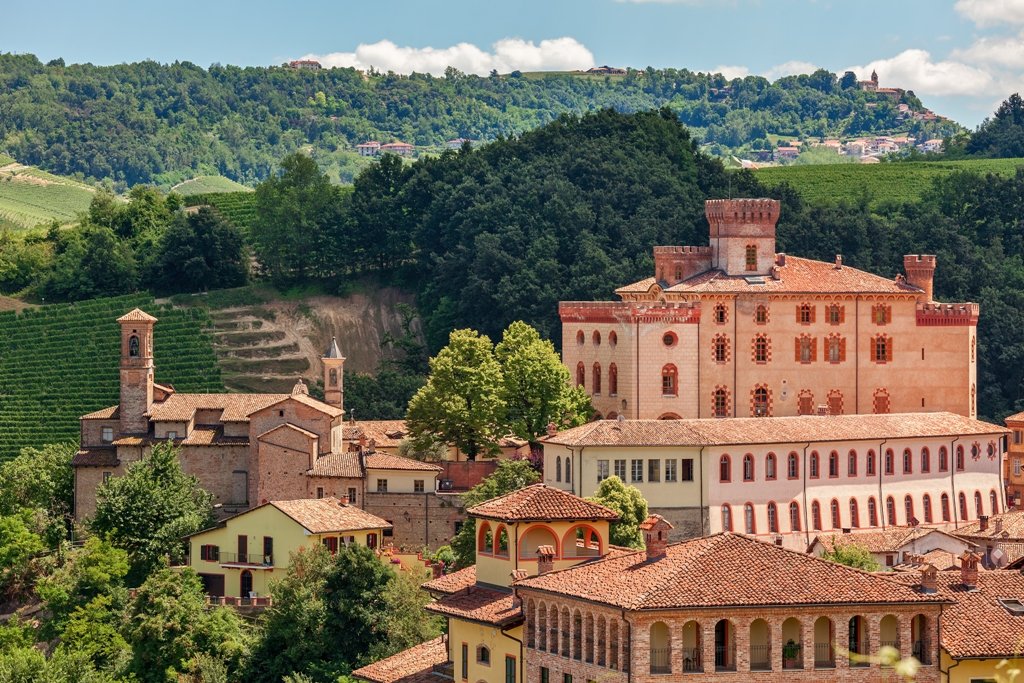
When it comes to the major tourist destinations in Italy, it goes without saying what's on most people's minds — the ancient monuments of Rome, the Renaissance masterworks of Florence, the canals of Venice, the rolling countryside of Tuscany. But in the northwestern-most corner of Italy, there are two regions that offer a very different experience altogether: Piedmont and the Aosta Valley.
This is a region where elegant cities surrender to vineyard-strewn hills — where medieval castles command dramatic views to the Alps, and small towns preserve an authentic relationship with centuries old culinary traditions. For travelers interested in a quieter, more immersive side of Italy — without sacrificing excellent hotels, remarkable food, history, or scenery — Piedmont and the Aosta Valley are well worth investigating.
Piedmont combines the sophistication of Turin with the rolling hills of the Langhe, with historic towns like Alba and Barolo, not to mention a culinary tradition among Italy's most celebrated in terms of its ingredients and quality. Further north, the neighbouring region of Aosta Valley takes things up another gear — with Roman ruins, medieval castles and mountain villages, alongside some of the most dramatic and arresting scenery in the Western Alps. Italy's official tourism website describes Piedmont as a region of elegant cities, Alpine landscapes, historic architecture and renowned food traditions, while Aosta Valley is Italy's smallest region and is particularly known for its mountains, castles and historic capital.
Together they make for one of the most rewarding and authentic private northern Italian itineraries available to the experienced traveler, one who wishes to venture beyond the tried and tested "once in a lifetime" itineraries.
Why Visit Piedmont and the Aosta Valley?
The appeal of these neighboring regions lies in their variety.
Within a relatively compact part of northwestern Italy, travelers can move from Turin's grand boulevards and royal palaces to the peaceful hills of the Langhe, then continue north into an Alpine valley filled with castles, Roman history and mountain scenery.
There is also a welcome sense of space. Rather than traveling simply to check famous landmarks off a list, Piedmont and Aosta Valley encourage slower exploration. A morning might be devoted to a private museum visit or historic town, followed by a leisurely regional lunch and an afternoon drive through landscapes that are themselves part of the experience.
So if you already checked off Florence, Rome and Venice, this can feel like stepping into a whole new country.
Piedmont: Elegant Cities, Rolling Hills and Exceptional Cuisine
Piedmont — Piemonte in Italian — literally means “at the foot of the mountains,” an appropriate description for a region framed by the Alps.
Its landscape is surprisingly diverse. There are mountains and valleys in the north and west, historic cities and agricultural plains around Turin, and undulating vineyard country farther south. The Langhe, Roero and Monferrato are particularly famous for landscapes shaped by generations of agriculture and winemaking; selected vineyard areas here are recognized as a UNESCO World Heritage Site for their historic relationship between people, local grape varieties and the land.
For visitors, however, Piedmont is about far more than its countryside.
Turin: One of Italy’s Most Elegant and Overlooked Cities
Turin, the regional capital, is an ideal introduction to Piedmont.
Once Italy's first national capital, the city has a distinctly regal character. Wide avenues, arcaded streets, Baroque architecture, historic cafés and grand piazzas give Turin an elegance that feels different from Rome or Florence. The Alps rising beyond the city provide a dramatic backdrop.
The city's cultural attractions are equally impressive.
One of the highlights is the Museo Egizio, Turin's Egyptian Museum. Founded in 1824, it is the world's oldest museum devoted specifically to Egyptian civilization and remains one of Europe's most significant Egyptological collections.
The Royal Palace and other residences associated with the House of Savoy reveal another side of Turin's history, while the Mole Antonelliana has become one of the city's most recognizable landmarks.
Yet some of Turin's pleasures are considerably simpler. Walking beneath its covered arcades, stopping in elegant pastry shops, exploring neighborhood markets and enjoying the ritual of a long lunch can be just as memorable as visiting its major monuments.
For travelers who appreciate architecture, design and history but prefer cities that reward unhurried exploration, Turin is one of Northern Italy's most appealing stops.
The Langhe: Piedmont’s Storybook Countryside
South of Turin, the scenery softens into the hills of the Langhe, where cultivated slopes surround medieval villages and castles.
This is the Piedmont many travelers picture after discovering the region: winding country roads, hilltop church towers, hazelnut groves, farms and vineyards stretching toward the horizon. UNESCO's protected Vineyard Landscape of Piedmont encompasses several winegrowing areas of the Langhe-Roero and Monferrato and reflects centuries of agricultural knowledge embedded in the landscape.
Two of the area's best-known names are Alba and Barolo.
Alba: Truffles, Medieval Streets and Piedmontese Tradition
Alba makes an excellent base for discovering the Langhe.
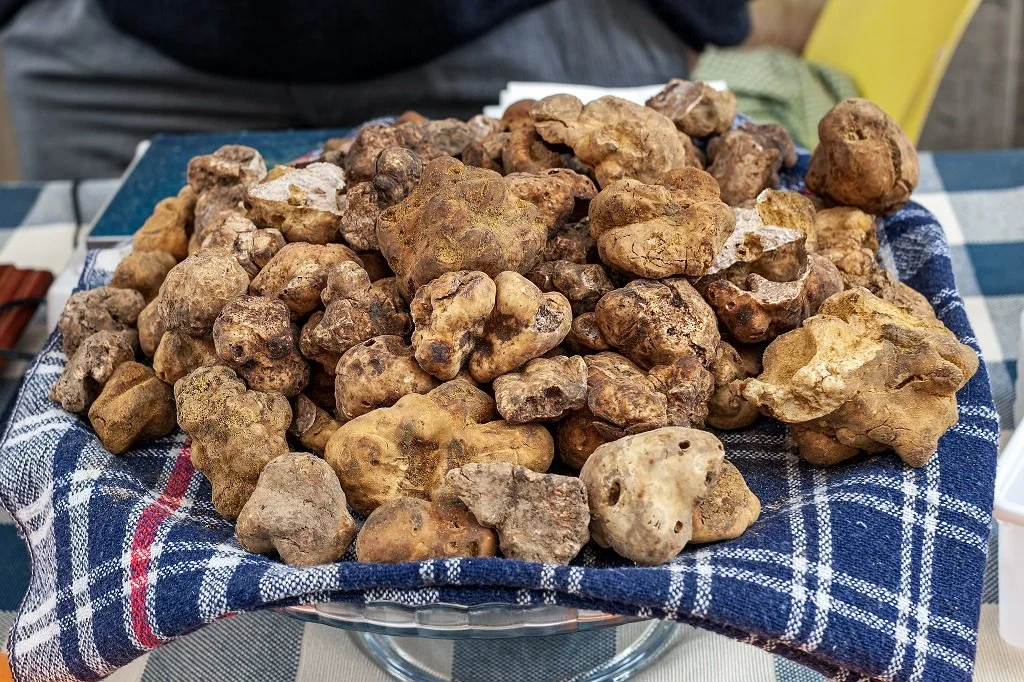
Its historic center is compact enough to explore slowly, with medieval towers, churches, pedestrian streets and specialty food shops offering an introduction to Piedmont's gastronomic traditions. The town is especially associated with the prized white truffle of Alba, which has made the surrounding region famous among chefs and food lovers around the world. Italy's national tourism authority likewise highlights Alba's medieval heritage and international reputation for white truffles.
Autumn is particularly atmospheric in the Langhe, when the hills change color and seasonal ingredients take center stage. Spring and early summer, meanwhile, offer greener landscapes and comfortable conditions for exploring small towns and the countryside.
Barolo and the Hill Towns of the Langhe
A short drive through the hills leads to small villages including Barolo, La Morra, Monforte d'Alba and Serralunga d'Alba.
Their appeal is not based on a long checklist of monuments. Instead, this is a landscape to experience slowly: panoramic viewpoints, medieval lanes, castle silhouettes and sweeping agricultural scenery.
That slower pace is one of the strongest arguments for exploring the Langhe privately. Rather than building the day around transportation schedules or large-group stops, a private itinerary can leave room for scenic detours, smaller villages and longer lunches.
Piedmontese Food Is Worth the Journey on Its Own
Piedmont has one of Italy's most distinctive regional cuisines.
Expect dishes built around ingredients from the surrounding landscape: handmade tajarin pasta, stuffed agnolotti, risotto, hazelnuts, local cheeses, mushrooms and seasonal truffles. Turin is also closely associated with chocolate and gianduja, the celebrated combination of chocolate and hazelnut.
For travelers interested in Italian cuisine, this is a region where food tells the story of geography particularly clearly. Mountain traditions, fertile agricultural plains and the produce of the Langhe all meet within a relatively small area.
And because many dishes remain strongly connected to particular towns and seasons, meals become an important part of understanding the destination rather than simply a break between sightseeing stops.
From Piedmont to the Aosta Valley: Italy Turns Alpine
Travel north from Piedmont and the character of the journey changes remarkably quickly.
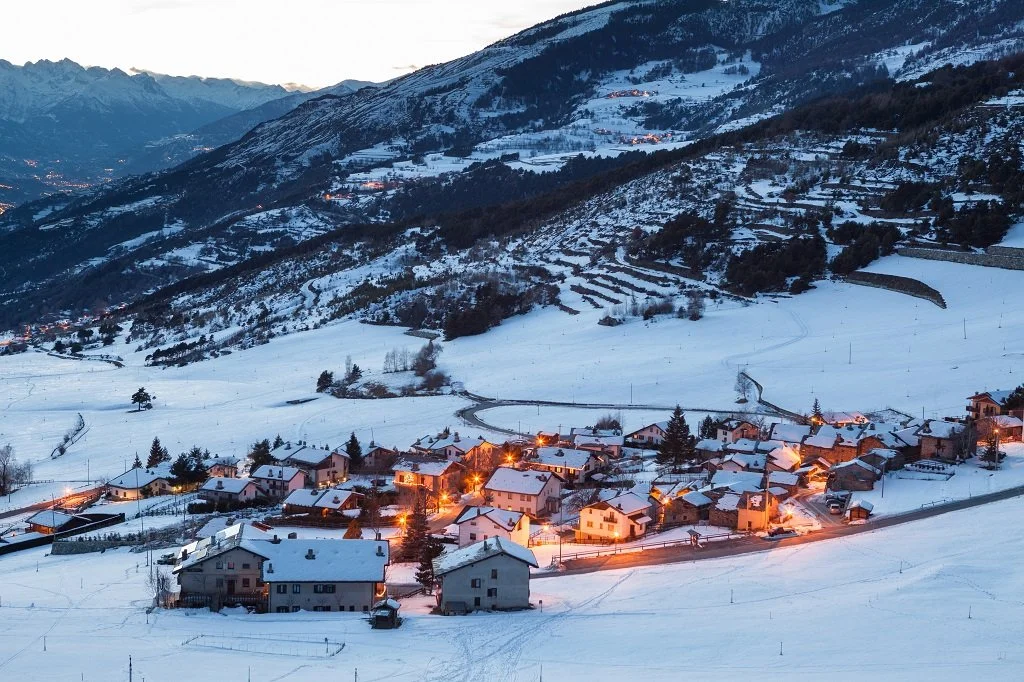
The hills give way to an increasingly narrow valley enclosed by enormous mountains. Stone castles appear above the road. Villages sit beneath snowcapped peaks. Architecture becomes more distinctly Alpine, and French influences become increasingly visible alongside Italian traditions.
Welcome to the Aosta Valley, or Valle d'Aosta.
Although it is Italy's smallest region, its concentration of history and natural beauty is extraordinary. The valley contains some of the highest peaks of the Alps as well as historic settlements, fortresses and routes that have connected Italy with the rest of Europe for centuries.
Aosta: The “Rome of the Alps”
The regional capital, Aosta, offers one of the most fascinating historical surprises in northern Italy.
Founded during the Roman era as Augusta Praetoria, Aosta occupied a strategic position along routes crossing the Alps. Enough of its Roman heritage survives that the city is sometimes described as the “Rome of the Alps.”
Visitors can encounter Roman remains alongside medieval churches, narrow streets and lively piazzas, all surrounded by mountains.
This combination is what makes Aosta so distinctive. Few Italian cities allow travelers to spend the morning exploring ancient history and then look beyond the rooftops to see Alpine summits dominating the horizon.
The historic center is also manageable at a comfortable pace, making Aosta an appealing base for travelers who want substantial history without the intensity of a larger city.
The Castles of the Aosta Valley
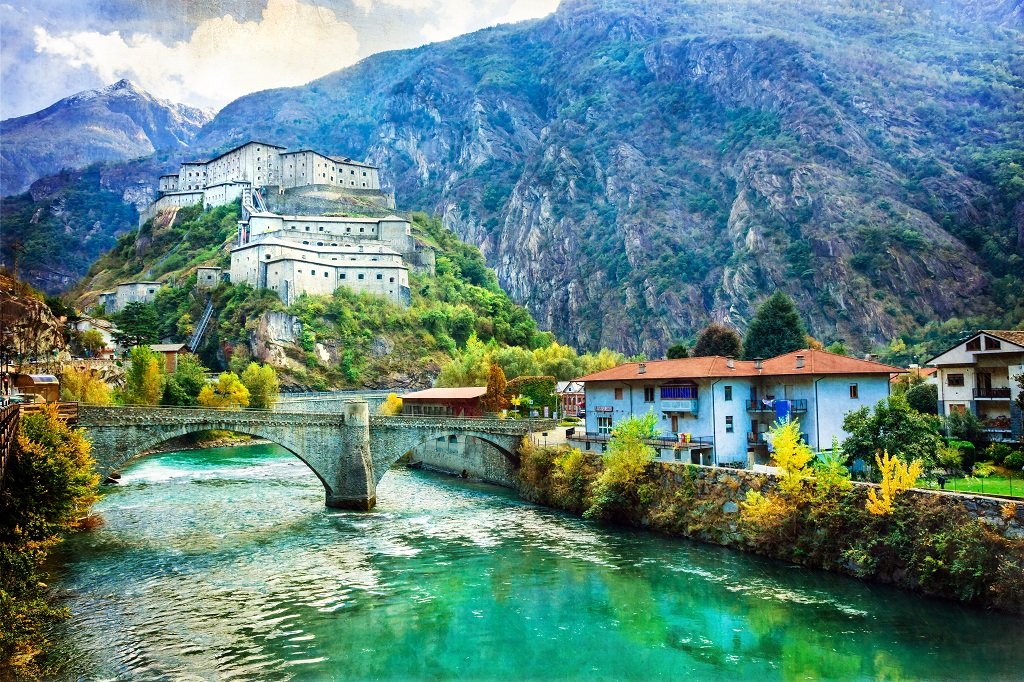
Driving through the Aosta Valley can sometimes feel like passing through an illustrated medieval history book.
Fortresses and aristocratic residences occupy hillsides and strategic positions throughout the valley, reflecting its importance as a corridor through the Alps.
Among the most interesting is Issogne Castle, whose interiors preserve elaborate decorations and frescoes depicting aspects of everyday medieval life. The castle is included on Italy Luxury Tours' current Piedmont and Aosta Valley itinerary as part of a privately guided exploration of the region.
Other notable castles include Fénis, recognized for its towers and fortified appearance, and Verrès, an imposing late-14th-century fortress associated with the Challant family.
For history enthusiasts, the advantage of exploring the valley with a knowledgeable private guide is context. Rather than seeing a sequence of attractive castles, travelers can understand why they were built where they were, how powerful families controlled these Alpine routes, and how architecture changed as defensive strongholds gradually became noble residences.
Courmayeur and the Majesty of the Italian Alps
Continue west through the valley and the mountains become increasingly dramatic.
At the foot of the Mont Blanc massif sits Courmayeur, one of Italy's best-known Alpine towns. Despite its international reputation, it retains a recognizable village center, particularly around Via Roma, with traditional Alpine architecture surrounded by forests, glaciers and towering peaks.
Courmayeur works particularly well for travelers who want mountain scenery without building an entire vacation around strenuous outdoor activity.
A leisurely visit might revolve around scenic viewpoints, gentle valley walks, an Alpine lunch, spa time and drives through nearby mountain communities. Val Ferret, north of Courmayeur, is especially admired for its views of the Mont Blanc massif and surrounding peaks.
For active travelers, the region also provides numerous opportunities for hiking and other outdoor experiences, although the beauty of the Aosta Valley is by no means limited to those seeking an adventure-focused vacation.
Cogne and Gran Paradiso: A Quieter Side of the Mountains
Travelers with additional time may also consider Cogne, an Alpine village surrounded by some of the Aosta Valley's most impressive natural scenery.
It offers a quieter counterpoint to Courmayeur and provides access to the landscapes around Gran Paradiso, making it appealing for travelers interested in nature, photography and mountain culture.
The experience here is less about major sightseeing and more about slowing down. Mountain views, traditional architecture and walks through the surrounding countryside become the day's highlights.
For travelers accustomed to tightly scheduled Italian vacations, spending an extra night in the mountains can be surprisingly restorative.
When Is the Best Time to Visit Piedmont and the Aosta Valley?
There is no single best season; the right time depends on the experience you want.
Late spring and early summer bring green hills, comfortable sightseeing weather and beautiful Alpine landscapes. This is an excellent period for combining cities, countryside and mountain scenery.
September and October are especially appealing in Piedmont as harvest landscapes and autumn colors transform the Langhe, while seasonal truffles become a major part of regional cuisine.
Winter changes the character of the Aosta Valley completely. Snow-covered villages and mountain resorts create a classic Alpine atmosphere, while Turin remains an appealing cultural city break.
Travelers primarily interested in sightseeing rather than winter sports may find late spring through autumn the easiest period for combining both regions in a single itinerary.
How Many Days Do You Need for Piedmont and the Aosta Valley?
For most travelers, seven to ten days provides enough time to appreciate both regions without rushing.
A well-paced journey might begin with several nights in the Langhe, allowing time for Alba and the surrounding hill towns. From there, continue to Turin for two nights of privately guided cultural exploration before traveling into the Aosta Valley for castles, Roman Aosta and Alpine scenery.
That pacing is close to Italy Luxury Tours' current Piedmont and Aosta Valley program, which includes three nights in the Langhe, two in Turin and two in Aosta, supported by private transportation and local professional guides.
Travelers with additional time can extend farther into the mountains or combine Piedmont with nearby destinations elsewhere in Northern Italy.
The key is resisting the urge to cover too much territory. This part of Italy is at its best when the journey leaves time for small villages, scenic drives and experiences that cannot be reduced to a sightseeing checklist.
Is Piedmont and the Aosta Valley Right for a First Trip to Italy?
They certainly can be, but these regions are particularly rewarding for return visitors to Italy.
Someone seeing the country for the first time may understandably prioritize Rome, Florence and Venice. Travelers returning for a second or third journey often want something different: fewer famous monuments, more regional character, exceptional landscapes and a stronger feeling of discovery.
Piedmont and Aosta Valley provide exactly that.
They are also well suited to travelers who prefer private travel. Distances between highlights can be deceptive on a map, and many of the most memorable places lie outside major rail corridors. Having a private driver and knowledgeable local guides makes it much easier to connect historic cities, countryside and mountain towns while traveling at a comfortable pace.
Discover a Different Side of Northern Italy
Some of Italy's most memorable journeys happen beyond the destinations everyone already knows.
In Piedmont, grand Turin gives way to the timeless hills of the Langhe, where medieval villages and regional culinary traditions remain deeply connected to the landscape. In the Aosta Valley, Roman roads, centuries-old castles and quiet Alpine communities sit beneath some of Europe's most dramatic mountain scenery.
Together, the regions offer history without overwhelming crowds, sophistication without pretension, and enough variety to make every day of the journey feel distinct.
For travelers searching for underrated places in Northern Italy, this corner of the country is difficult to surpass.
At Italy Luxury Tours, we specialize in custom private tours of Italy designed around each traveler's interests, priorities and preferred pace. Our Piedmont and Aosta Valley journeys can combine privately guided cultural experiences, comfortable door-to-door transportation, historic towns, regional cuisine and the extraordinary landscapes of the Italian Alps.
Whether Piedmont and Aosta Valley become the focus of your entire vacation or part of a longer journey through Northern Italy, a thoughtfully planned private itinerary allows you to experience this remarkable region with the time, comfort and local insight it deserves.