
Common Types of Italian Architecture and How To Spot Them
Italy contains thousands of years of construction history stacked on top of itself, layer by layer, city by city. You can walk past a Roman ruin, turn a corner, find yourself staring at a Renaissance church, and then encounter a Baroque fountain a block later. If you want to visit Italy, then you can enrich your experience by learning about the common types of Italian architecture and how to spot them. Let’s dive into the basics.
Ancient Roman Architecture
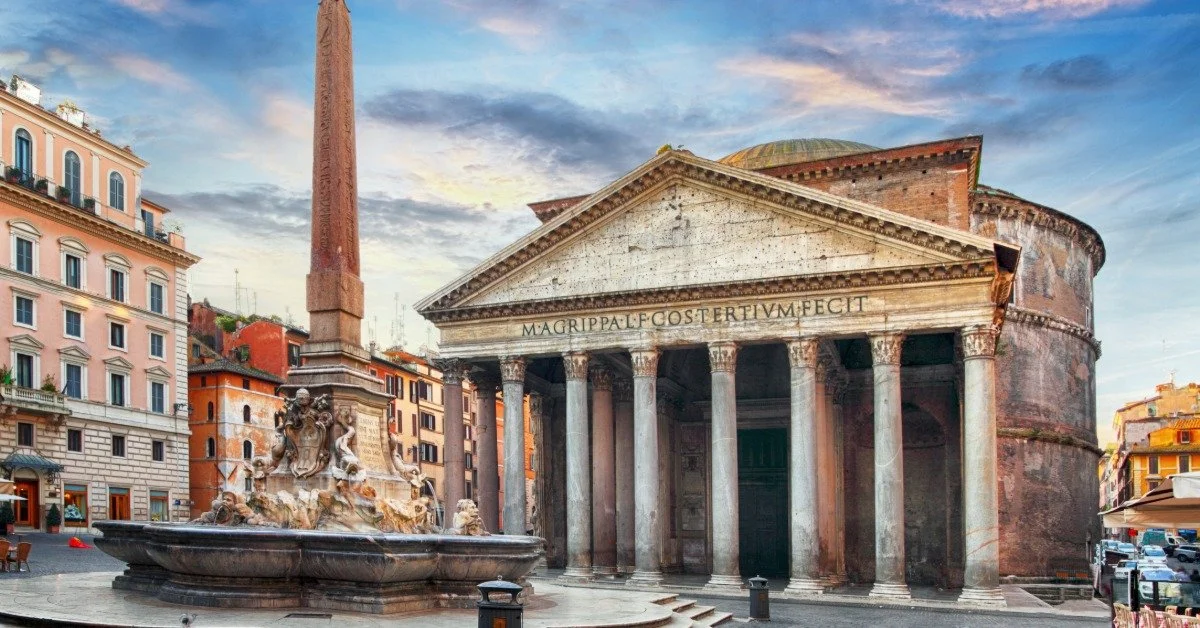
When most people picture Italian architecture, they think of Rome. The ancient Romans were engineering pioneers who built on a massive scale. They relied heavily on the arch, the vault, and the dome to span large spaces without needing a forest of interior columns. They also perfected concrete, which gave them the freedom to build stable, long-lasting structures that earlier civilizations couldn’t.
How To Spot It
Look for semicircular arches, massive stone blocks, and buildings that are partially underground or partially ruined.
The Colosseum and the Pantheon are the most famous examples, but you’ll find Roman remnants scattered across the entire country, from Pompeii in the south to Verona in the north.
Romanesque Architecture
Romanesque architecture emerged in Western Europe between roughly the 9th and 12th centuries, and Italy has some of the finest examples on the continent. This style takes cues from ancient Rome but applies them to medieval Christian buildings, particularly churches and cathedrals.
How To Spot It
The defining features of this style are thick stone walls, small windows, and round arches. Facades are often decorated with blind arcading, which is a row of decorative arches carved into the stone that serve no structural purpose.
The Baptistery of San Giovanni in Florence and the Basilica di Sant’Ambrogio in Milan are classic examples.
Gothic Architecture
Gothic architecture arrived in Italy later than it did in France, and the Italians never fully embraced it the way northern Europeans did. That said, you’ll still find remarkable Gothic buildings across the country, and they’re worth knowing how to identify.
How To Spot It
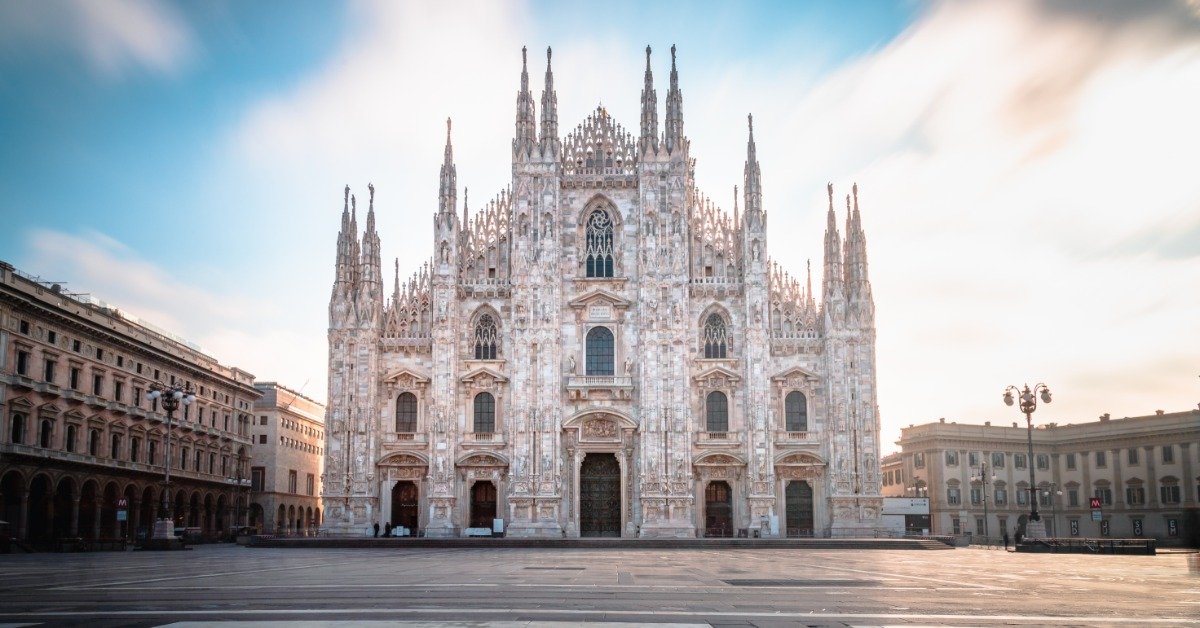
The Gothic style is about pushing stone construction to its limits. Its builders developed the pointed arch and the flying buttress, which is an external arched support that transfers the weight of the roof outward and downward. This structural innovation meant walls could be thinner and windows could be enormous, flooding interiors with light. Gothic buildings reach for the sky with tall spires, pointed arches, and steep rooflines. The interiors feel vertical and luminous compared to the cave-like solemnity of Romanesque churches.
The Duomo di Milano is the most extreme example in Italy, with its forest of spires and Gothic tracery. The Santa Maria Novella in Florence also has Gothic elements, though its facade was later updated in the Renaissance style.
Renaissance Architecture
The Renaissance is where Italian architecture truly set itself apart from the rest of the world. Beginning in Florence in the 15th century, architects like Filippo Brunelleschi and Leon Battista Alberti looked back at ancient Roman and Greek buildings and used those principles to create something new. The Renaissance was a conscious rejection of the Gothic style in favor of symmetry, proportion, and classical detail.
How To Spot It
Renaissance buildings are symmetrical, often with a central entrance, evenly spaced windows, and horizontal cornices that divide the facade into distinct zones. You’ll see columns and pilasters modeled after Roman orders: Doric, Ionic, and Corinthian.
Brunelleschi’s Ospedale degli Innocenti in Florence is considered the first true Renaissance building, and the dome he designed for the Florence Cathedral remains one of the most impressive feats of engineering in architecture history.
Baroque Architecture
Baroque architecture developed in Rome in the early 17th century and spread across the entire Italian peninsula. Where the Renaissance prized restraint and order, the Baroque pushed in the opposite direction: excess.
The Catholic Church drove much of the Baroque construction boom. After the Protestant Reformation challenged Catholicism’s authority, the Church used art and architecture to reassert its power and inspire awe in its followers.
How To Spot It
Baroque buildings feel dynamic, like they’re in motion even when they’re standing still. Look for curved facades, oval floor plans, twisted columns called solomonic columns, and an abundance of sculptural decoration.
Saint Peter’s Square in Vatican City and the Church of Sant’Agnese in Agone in Rome’s Piazza Navona are defining examples. Sicily, particularly the Val di Noto region, has an entirely rebuilt Baroque city grid after a 1693 earthquake leveled the area.
Neoclassical Architecture
By the 18th century, European architects grew tired of Baroque excess and turned back to ancient Greece and Rome for inspiration, creating Neoclassical architecture. In Italy, this style shows up most prominently in civic and public buildings from the 1700s and 1800s.
How To Spot It
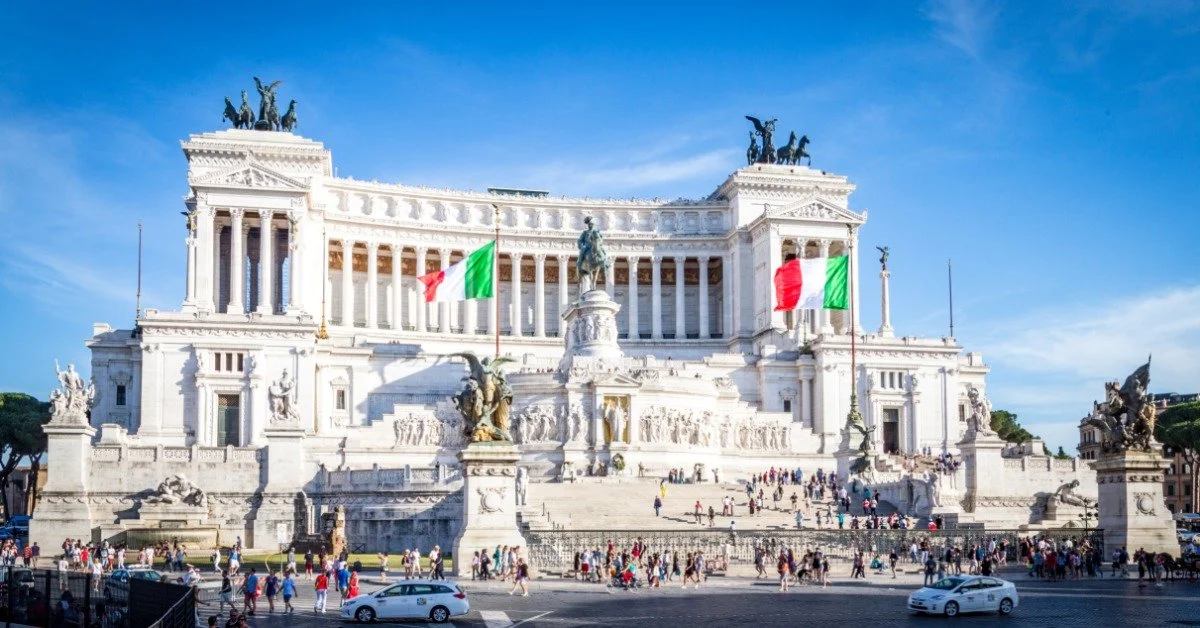
Neoclassicism looks like a cleaner, more literal interpretation of ancient buildings than the Renaissance managed. Neoclassical buildings feature symmetrical facades, large columns with classical capitals, and triangular pediments above entrances. The decoration is also restrained compared to the Baroque period.
The Teatro alla Scala in Milan and the Vittoriano monument in Rome (sometimes called the “wedding cake” due to its white marble and tiered design) are well-known Neoclassical structures.
Fascist Architecture
Mussolini’s Italy produced a distinct and often unsettling architectural style between the 1920s and 1940s. Fascist architecture combined stripped-down classical forms with modern materials and monumental scale. The goal was to invoke the grandeur of ancient Rome while projecting the power of the modern Italian state. These buildings are polarizing, but they’re part of Italy’s history, and you’ll encounter them in major cities, particularly Rome.
How To Spot It
Fascist buildings are large, blocky, and stripped of ornament. They use classical proportions but remove the decorative details, leaving behind severe facades with repetitive arched windows or colonnades.
The EUR district in Rome, built for a World’s Fair that never happened due to World War II, is the clearest example. The Palazzo della Civiltà Italiana in EUR, nicknamed the “Square Colosseum,” is particularly emblematic.
See These Styles Firsthand
The best way to connect these styles to what you’ve read here is to stand in front of the buildings themselves. If you book with Italy Luxury Tours, we can take you to see all the common types of Italian architecture and teach you how to spot them with expert insight from our guides. We offer pre-designed tours, such as our selection of off-the-beaten-path Italy tours, but we can also fully customize an itinerary according to your wishes. Inquire today to start planning the trip of a lifetime, complete with some of the best history, culture, food, art, and—of course—architecture the world has to offer.
