
Interesting Facts About the History of Italy
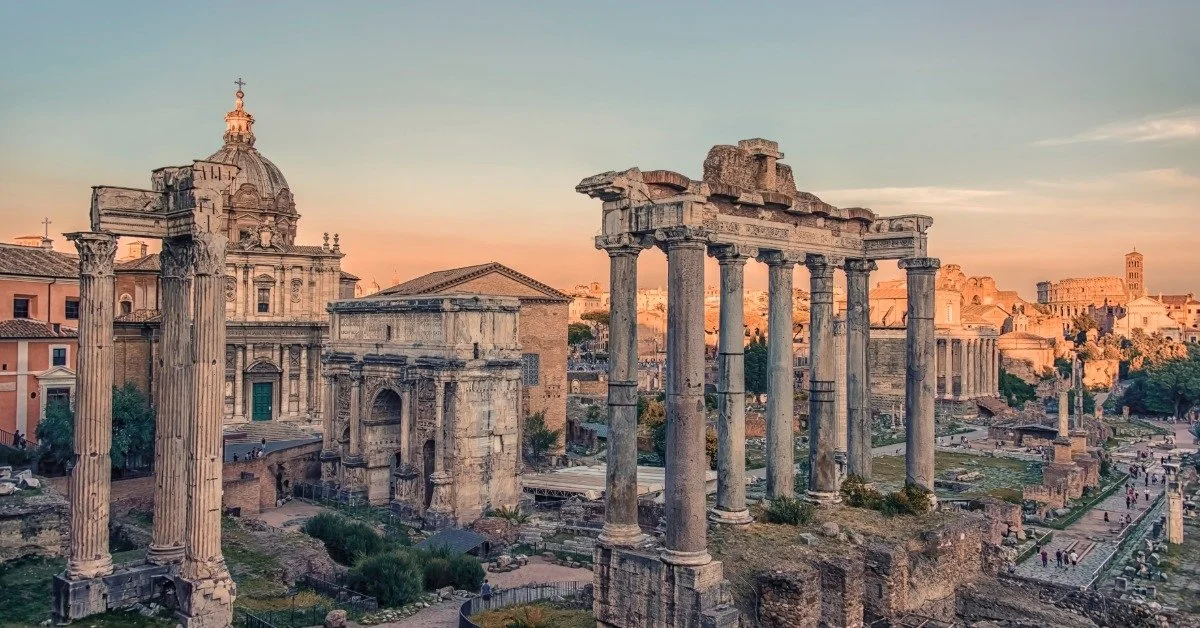
Italy is a beautiful country to visit, and one reason for that is its rich, fascinating past. In fact, it’s a living, breathing archive of human civilization. Whether you would like to inform an upcoming trip or simply learn more about Italy’s history, read along for several interesting facts that you likely didn’t know.
Italy Didn’t Become a Unified Country Until 1861
To most people, Italy is an ancient, ancient country. However, even though the land has been there, Italy as a unified nation is actually pretty young.
Before 1861, the Italian peninsula was a patchwork of independent kingdoms, city-states, and territories, many of which were controlled by foreign powers like Austria and Spain. This patchwork became one through a unification process known as the Risorgimento, which figures like Giuseppe Garibaldi and Count Camillo Benso di Cavour led. It was a lengthy political and military campaign that ultimately brought the peninsula together under the Kingdom of Italy. Rome itself didn’t even join until 1870.
The Romans Made the World’s Best Concrete
The Romans were architectural visionaries, and that was in part made possible by their use of concrete. But we’re not talking about the concrete you can buy at Home Depot nowadays.
Roman engineers developed a unique concrete mix with the notable ingredients of volcanic ash, lime, and seawater. This mixture produced a chemical reaction that created a calcium-aluminum-silicate-hydrate bond, which is exceptionally strong and even gets stronger over time.
Modern scientists have studied this material and found that it outperforms today’s concrete in long-term durability. That is the reason structures like the Pantheon, with its massive unreinforced concrete dome, are still standing more than 2,000 years later.
The Catholic Church Once Controlled a Third of Italy
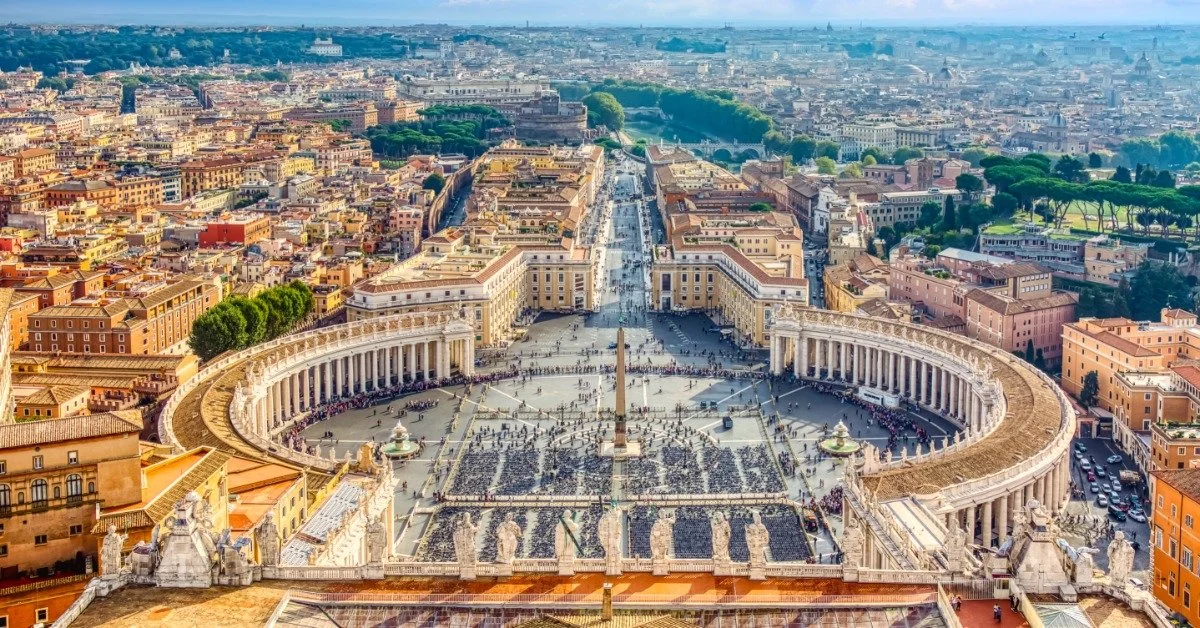
The Papal States were a significant chunk of central Italy that the Catholic Church governed as a political entity for over a thousand years, from 756 until 1870. In this territory, the Pope wasn’t just a religious leader. He was also a head of state, commanding armies and negotiating with kings. At its peak, this territory stretched across much of central Italy and held enormous political influence over the continent.
In 1870, when the Italian unification finally absorbed Lazio, the region with Rome and the last of the Papal States to be conquered, it triggered a standoff between the Church and the Italian government. This lasted until 1929, when the Lateran Treaty established Vatican City as its own independent sovereign state, which remains as such today.
Pompeii Was Completely Forgotten for Over 1,500 Years
In 79 CE, the eruption of Mount Vesuvius buried the city of Pompeii under several meters of volcanic ash and pumice in a matter of minutes. An estimated 2,000 people died in Pompeii proper, and up to 16,000 overall when we include casualties in the surrounding areas.
But after this traumatic event, the city essentially vanished from memory. It wasn’t until 1748 that excavations began to reveal what the ash had preserved beneath, and what archaeologists found was extraordinary. Because of the rapid burial, Pompeii was frozen in time. Streets, buildings, food left on countertops, personal belongings, and even the shapes of human bodies preserved in the ash gave historians an incredibly detailed look at daily life in ancient Rome. Work at the site is still ongoing today.
Italy Gave the World Double-Entry Bookkeeping
You might not think of accounting as one of Italy’s great contributions to civilization, but it is! Double-entry bookkeeping, the system of recording financial transactions that the entire modern banking and business world still uses, was developed in medieval Italy. Luca Pacioli, a Franciscan friar and mathematician, is credited with publishing the first comprehensive description of the system in 1494 in Venice. Italian merchants, particularly in Florence, Genoa, and Venice, were already using variations of it before that, and it fueled the rise of the powerful banking families, including the Medici, who helped bankroll the Renaissance.
The Renaissance Began in Italy
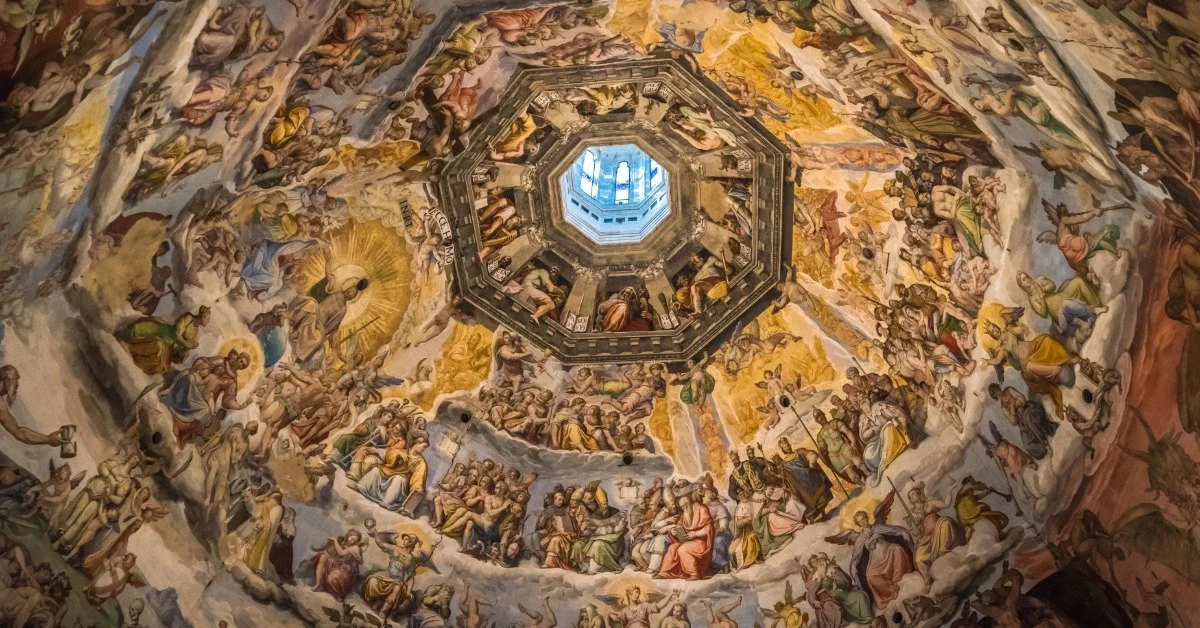
Many people imagine the Renaissance as a single era that swept across Europe, but it actually started in one very specific place: Florence, Italy, in the 14th century. It grew out of a combination of factors unique to the city, including these:
extraordinary wealth from banking and trade
the patronage of families like the Medici
access to ancient texts that had survived in monastery libraries
a concentration of extraordinarily talented artists and thinkers
Figures like Leonardo da Vinci, Michelangelo, Brunelleschi, and Botticelli weren’t scattered across the continent. They were clustered in a relatively small geographic area, many of them working within a few decades of each other.
Italy Was the Anchor of the Ancient World’s Road Network
The saying “all roads lead to Rome” isn’t just a figure of speech. The Romans built an incredible 185,896 miles of roads across their empire, and it all started in Italy. The Appian Way, constructed beginning in 312 BCE, was the first major Roman road and connected Rome to the southeastern part of the peninsula.
Roman road construction was an engineering achievement that wouldn’t be matched in scale for over a thousand years. The roads were incredibly durable, thanks to the aforementioned volcanic concrete formula and built-in drainage systems. Many of these roads were routes that modern Italian highways still follow today.
Italy Has More UNESCO World Heritage Sites Than Any Other Country
You’ve heard of UNESCO World Heritage Sites, but you might not have known that Italy has more than any other country. That list includes ancient ruins, Renaissance cities, Baroque town squares, Alpine landscapes, and entire historic city centers. The sheer density of historically significant places means that even in areas tourists rarely reach, you’re likely to be standing somewhere that’s had continuous human settlement for thousands of years.
That’s why there are so many places to visit in Italy off the beaten path that are not lacking in richness and wonder. Italy’s history isn’t confined to museums. It’s built into the streets, the hillside villages, and the coastline towns that most visitors never get around to seeing.
Plan Your Visit to Italy To Learn More
Knowing these interesting facts about the history of Italy changes how you experience the country. You stop seeing an old building as just a backdrop and start seeing it as evidence of an entire civilization’s ambitions, conflicts, and ingenuity. Italy produced the foundation of so much of what the modern world runs on, from legal systems and architecture to finance and the Catholic Church.
If you’re planning a visit, you’ll get far more out of your trip with this context in your back pocket. You’ll also experience the country more fully with expert guidance and a perfectly designed tour from Italy Luxury Tours. Whether you want to see the country’s hidden gems or witness the most popular marvels, we can take you there in style. Inquire today for more information and a free quote.
